Afghan refugee in southern France charged with terrorism after clandestine stay with Taliban
A 28-year-old man holding refugee status in France is suspected of traveling to Afghanistan for military training and returning with jihadist intentions. Arrested in Lourdes, he was placed in pretrial detention on July 3.
Before the French Office for the Protection of Refugees and Stateless Persons (OFPRA), Awalkhan K. recounted the tragic story of a young Afghan persecuted by the Taliban. According to his account, the Islamist fundamentalists accused him of espionage and treason, suspecting him of having built a bomb and passed strategic information to the former legitimate government, helping to prepare an armed offensive.
Captured, threatened and then released after tough negotiations, the young man, whose father was beaten in retaliation, eventually left his home country the year the Taliban returned to power, in August 2021. After spending two years in Turkey, he planned to settle in England. However, after his boat broke down in the English Channel, Awalkhan K. was forced to remain in France, where he has been officially registered since November 2023. He has held asylum status since then.
Three years later, the truthfulness of his account has come under serious scrutiny following a French counterterrorism investigation. Le Monde has learned that on July 3, Awalkhan K. was charged with "terrorist criminal conspiracy aimed at preparing crimes against persons," as well as "advocating and funding terrorism." This information has been confirmed by the French anti-terrorism prosecutor's office. The 28 year old was placed in pretrial detention following his police custody at the headquarters of the General Directorate of Internal Security (DGSI) and his arrest in Lourdes, southwestern France.
At this stage of the investigation, counterterrorism authorities suspect him of having been an "infiltrator" in France, a "supporter of Afghan and Pakistani terrorist networks." They discovered he made a clandestine trip to Afghanistan, where he allegedly rubbed shoulders with the very Taliban who were supposedly persecuting him, with the aim of obtaining weapons and combat training. After returning to France, photos and conversations suggested he was pursuing a jihadist mission, with the suspect, among other things, expressing a wish to die a "martyr."
Path to jihad
Awalkhan K. might have gone unnoticed if not for the vigilance of a social media user. In the summer of 2025, that person flagged to the police reporting platform Pharos posts from a TikTok account glorifying the Haqqani network – a militant Islamist group active since the late 1970s in Afghanistan and Pakistan, allied with the Taliban now in power in Kabul – and the Tehrik-e-Taliban Pakistan (TTP, also known as the Pakistani Taliban Movement). Both groups are designated as terrorist organizations by the United States and are under United Nations sanctions.
"I am leaving with the TTP toward the peaks of the great mountains," reads one of the posted messages. "I am heading for the clashes, and mother, pray for me." Another message said: "Standing on the battlefield like my beloved Hakimullah. In wars, Hakimullah is a hero," referring to Hakimullah Mehsud, the former leader of the Pakistani Taliban killed by a US drone in 2013. The author also urged his more than 16,000 followers to follow the path of jihad, which he described as an "obligation."
After several months of investigation, the account was traced to Awalkhan K., born in Afghanistan's Logar province and living in Lourdes. On June 29, 2026, the refugee, who had recently started working as a dishwasher at a hotel, was arrested as he left work. Several photos and videos pulled from his phones, some of which had been posted on social media, showed he had recently spent time in Afghanistan.
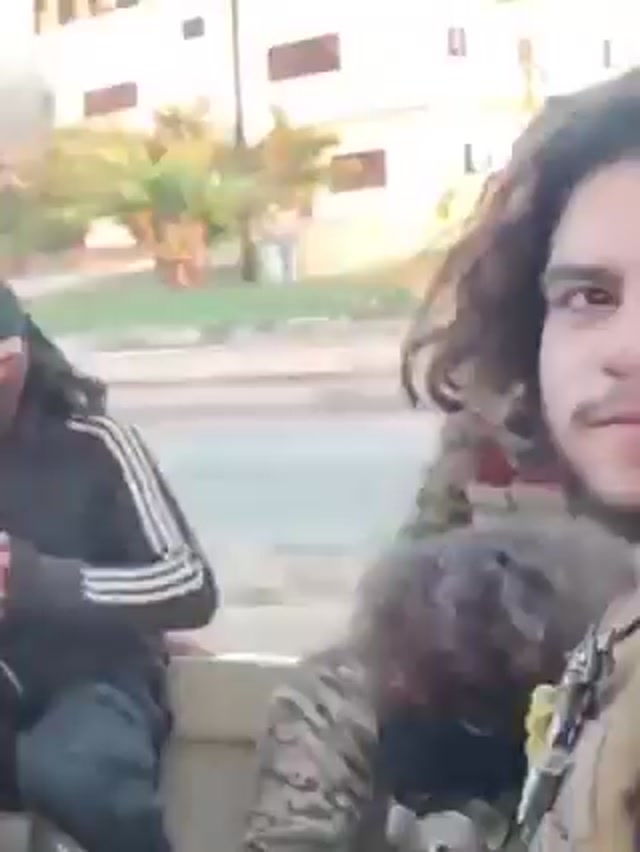
He was pictured alongside Taliban fighters, often holding military-grade weapons. In one photo, whose metadata indicates it was taken in Jalalabad province on December 27, 2025, he appears in traditional dress, carrying a Kalashnikov and a vest packed with ammunition magazines. Up until spring 2026, Awalkhan K. also posed in military attire in front of a mosque in Kabul province, with the Taliban's white flag, or inside a police barracks.
Investigators determined that he boarded a flight on December 9, 2025, to Istanbul, Turkey, carrying a visa for Iran. From there, they suspect he crossed the Afghan border. This journey lasted nearly four months, as Awalkhan K. returned to France on a flight from Hungary at the end of March.
Counterterrorism authorities suspect that he has harbored plans for violent action since his return. In certain conversations with associates, the young refugee spoke about armed jihad, "the fight," his wish to "reach paradise" and dying as a "shaheed" (a martyr). On his phones, troubling photos taken starting in April raised further concerns: Awalkhan K. photographed himself in front of landmarks and public buildings, such as the Eiffel Tower, as well as religious sites, dressed in traditional Afghan clothing, his face concealed by a scarf and his hands gloved.
In addition to a propaganda beheading video and photos of firearms, police also found an edited video showing the suspect in military fatigues, with the superimposed face of Sirajuddin Haqqani, the namesake leader of the Haqqani network and interior minister of the Taliban regime. The soundtrack included chants referencing "severed heads" or praising the Waziristan region, a stronghold of the TTP. Finally, while some members of the Afghan community in Lourdes noticed nothing suspicious about Awalkhan K., others described his radicalization, noting he was capable of threatening to behead fellow Afghans if they drank alcohol or ate during Ramadan.
Contradictions
During his police custody at DGSI headquarters, Awalkhan K. denied any jihadist plans, as well as any trip back to Afghanistan. According to his account, he had gone to Iran to visit his sick and hospitalized wife and his son. He claimed the photos were taken years earlier, despite technical data showing otherwise and evidence that his phone had connected to cell towers in Afghanistan recently.
"While the Afghan geopolitical context naturally calls for the vigilance of French authorities, it cannot replace the requirement to establish intentional and personal material acts showing conscious participation in an agreement to prepare terrorist crimes, which our client, who is presumed innocent, formally disputes," said Awalkhan K.'s lawyers, Réda Ghilaci and Emilie Quinton, when contacted by Le Monde.
The investigation, still ongoing, must resolve a number of questions, and even contradictions. Was the young man given a mission by Taliban handlers during his trip to Afghanistan? Specialists on the region see that scenario as counterintuitive, since the Taliban made commitments against terrorism upon returning to power. "There is no state policy by Afghanistan or the Taliban to organize and carry out planned attacks in Europe or the West. That would seem farfetched," said Gilles Dorronsoro, professor of political science at Paris 1 Panthéon-Sorbonne University. "The only actor in the region with an international agenda is the Islamic State group. However, one cannot rule out an individual initiative by someone with Taliban contacts, without having been commissioned by them."
According to a source familiar with the investigation, extensive technical inquiries are underway to determine whether the suspect received support from a terrorist network or was simply pursuing personal combat training.
Translation of an original article published in French on lemonde.fr; the publisher may only be liable for the French version.